
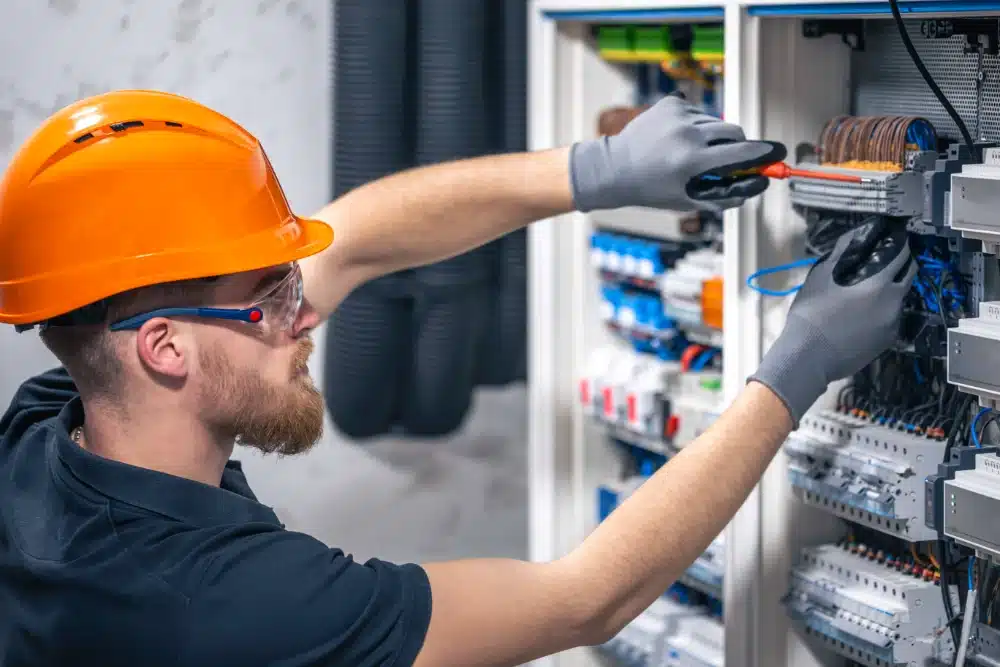
Electrical Installation Service for Strata Buildings, Renovations, and Homes
Main Drain Mechanical is a licensed mechanical and electrical contractor serving strata property managers, general contractors, and homeowners across the Lower Mainland. The company’s electrical installation service sits within a broader mechanical trade practice built around one standard: the job gets scoped correctly, executed by a licensed electrician, and backed by a 1-year workmanship warranty. With a Red Seal plumber and Class B gas fitter on the crew, fully insured and WorkSafeBC covered, Main Drain Mechanical handles work that crosses trade lines without the coordination gaps that slow down renovations or leave building managers chasing multiple contractors.
When the Scope Looks Simple Until the Wall Opens Up
You budgeted for a straightforward installation. Then the panel turns out to be already at capacity, the existing circuit runs the wrong gauge for the load, and suddenly a one-day job has expanded into a conversation about sub-panel installation, permits, and who exactly is responsible for the discrepancy. Electrical installations fail at the planning stage, not the installation stage – and by the time that becomes obvious, materials are ordered, walls are open, and the schedule has already slipped. Calling someone back to fix what the first crew missed costs more than getting the right load calculation at the start.
What an Electrical Installation Service Actually Covers
An electrical installation service handles the full scope of putting power where it needs to go: new circuit installation, panel upgrades, dedicated outlet runs, fixture connections, and the permit coordination that makes the finished installation code-compliant and insurable. Main Drain Mechanical carries the credentials and liability coverage that strata councils, general contractors, and homeowners need before a vendor touches the electrical system, and every job is backed by a 1-year workmanship warranty. The outcome is an installation that passes electrical inspection, holds up under actual load conditions, and doesn’t require a second crew to finish what the first one started.
How We Approach Each Electrical Installation Service Call
Most electrical problems that show up later were never wiring problem, they were scoping problems that got missed at the start. These are the standards that keep that from happening.
- A quote doesn’t get written before the panel is actually seen. Panel capacity and circuit layout get confirmed in person, because a load calculation done from a phone description is a guess, not a scope.
- Code minimum isn’t the target – the actual load is. Sizing to the bare code threshold is how a circuit passes inspection and still trips within a year; the crew sizes for what the equipment actually draws.
- A permit that gets pulled after the fact is a documentation problem waiting for a strata audit or a home sale. It gets filed before the first wire is run, not treated as paperwork to catch up on later.
- Another trade’s schedule doesn’t absorb an electrical delay. Rough-in gets sequenced with the GC upfront, because reopening finished framing to fix an electrical oversight is the expensive way to find out the coordination didn’t happen.
- “It powers on” isn’t the bar for finished. A connection gets called good once it’s tested under actual load, not once the panel door closes.
- A verbal confirmation isn’t a record. Strata managers, GCs, and homeowners get photos and written documentation, because a future inspection or handoff needs something to point to, not someone’s memory of the job.
Our Approach
Electrical Services We Provide
From a single dedicated circuit to a full panel upgrade, this is what falls under the crew’s electrical scope. Every job gets the same standard: scoped properly, permitted, and tested before the wall closes around it.
- New circuit installation: dedicated runs for new equipment or added load, sized to what’s actually being powered, not the minimum code allows.
- Panel upgrades and panel capacity assessment: confirming what a panel can actually handle before a renovation or new circuit gets scoped against it.
- Dedicated outlet runs: power routed to where equipment actually sits, not wherever was convenient to stop.
- Fixture and equipment connections: wiring terminated and tested under load before any wall closes around it.
- Permit coordination and inspection sign-off: pulled before work starts, scheduled to fit the project timeline, not chased after the fact.
- Electrical rough-in for renovations and tenant improvements: sequenced with the general contractor so framing and drywall don’t get reopened.
What Does a Electrical Intallations Cost in the Lower Mainland?
Electrical installation service pricing in the Lower Mainland starts at approximately $260 + GST for a basic service call covering assessment and minor work, with larger scope, panel upgrades, multi-circuit runs, full renovation rough-ins – typically ranging from $450 to several thousand dollars depending on the labour hours, materials, and permit requirements involved.
Jobs with substantial material costs or deposit requirements over $20,000 follow the same structured payment approach applied across all Main Drain Mechanical projects.
The single biggest factor in final cost is how well the scope is understood before work begins: a job that requires reopening walls, upsizing a panel that wasn’t assessed properly, or pulling a second permit after the fact will always cost more than one where the load calculation and circuit layout were confirmed at the start.