
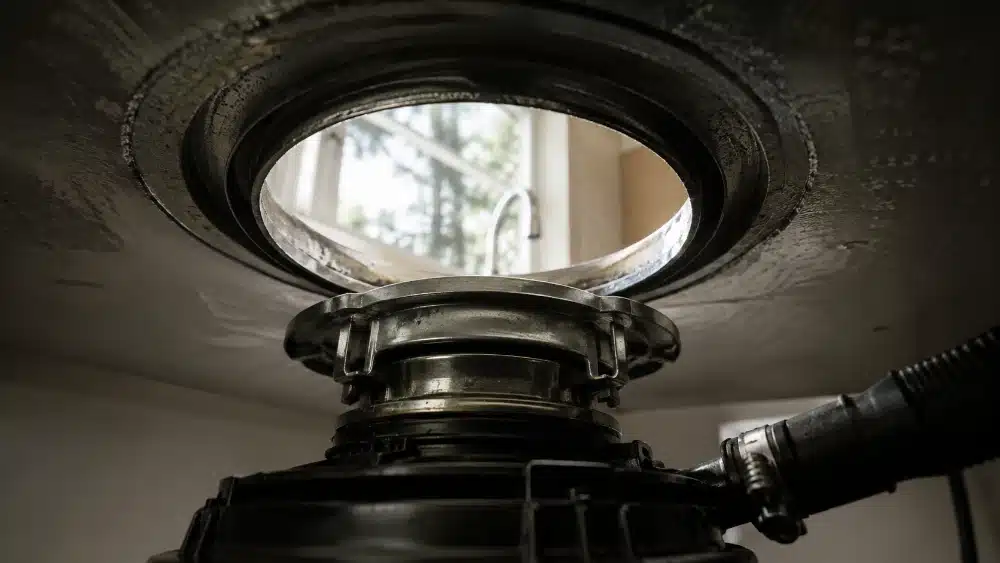
Waste Disposal Repair by a Plumber Who Knows the Drain Side Too
Main Drain Mechanical is a licensed plumbing and mechanical company serving homeowners, strata property managers, and general contractors across the Lower Mainland, with waste disposal and waste disposal repair and commercial garbage disposal repair as a regular part of the residential and commercial kitchen plumbing work the team handles. The company holds Red Seal plumber certification and carries full liability insurance and WorkSafeBC coverage – the credentials that matter when a repair needs to hold and the drain work behind it needs to be done properly. If your disposal is jamming, leaking, or refusing to reset without a clear reason, that’s exactly the kind of call this crew is set up for
When the Disposal Stops Working Mid-Cleanup
You’re halfway through clearing the kitchen after dinner and the unit jams, hums uselessly, or starts dripping down the cabinet wall under the sink. The reset button buys you another day, maybe two, and then the same thing happens again. A disposal problem rarely announces a clean cause: the grinding plate could be worn, the mounting seal could be failing, or the jam might have nothing to do with the motor and everything to do with how the drain line downstream is configured. Reaching under the sink and pushing reset is an easy first move, but it doesn’t tell you which of those things is actually wrong.
Our Waste Disposal Repair Service
Waste disposal repair services covers the full range of failures that show up in a kitchen disposal unit: a motor that hums without turning, a grinding plate that’s seized or worn past the point of clearing food waste, a mounting flange leaking at the sink basin, or a reset that trips repeatedly because the unit is pulling too much current. Main Drain Mechanical is a Red Seal certified plumbing company, and that credential matters here because disposal units connect directly to the drain line, and a repair that ignores the drain side often fails again within weeks. The outcome is straightforward: the unit grinds properly, the connection to the drain holds, and nothing leaks into the cabinet below.
How We Approach Waste Disposal Repair Jobs!
Two systems fail together here; the unit and the drain it feeds into, so the diagnosis has to rule out both before either gets touched.
- We won’t quote a new motor before checking if the old one actually failed. A unit that hums but won’t spin usually just needs the turntable freed, not a replacement, treating every hum as a dead motor costs the customer money the repair doesn’t require.
- A leak at the cabinet is never assumed to be the unit itself. The mounting flange and sink seal fail far more often than the disposal housing does, so that gets ruled in or out before anything more invasive is considered.
- The drain line downstream is part of the diagnosis, not an afterthought. A disposal unit that looks faulty can just be back-pressured by a partial blockage further down the line, the fault doesn’t get pinned on the unit until the drain is cleared as a cause.
- A tripping reset means something is drawing too much current, and that gets identified, not reset around. Repeatedly hitting the button doesn’t fix an electrical draw issue, and a repair that doesn’t explain why it was tripping isn’t finished.
- Replacement parts have to match the existing drain configuration, not just the make and model. Outlet position and discharge height vary enough between units that an unconfirmed swap creates its own leak point on day one.
- Nothing is called finished until it’s tested under a real load. A disposal that passes a quiet bench check can still fail the first time water and food waste actually run through it, so that’s the test that decides the job is done, not a visual check.
Who We Serve
How It Works: From Your First Call to a Warranted Job!
From the customer’s side, a garbage disposal repair call has a specific rhythm; different from a general plumbing visit because the diagnosis has to work through two systems at once, the unit and the drain line it feeds into.
- You describe what the unit is doing, and we listen for the pattern. A hum with no spin, a leak at the base, a reset that trips after a few uses, or a grinding noise that’s gotten progressively worse each point toward a different cause. That initial conversation shapes what tools and parts come on the truck, which matters because a second visit for a missing component wastes your time.
- The unit gets checked with power off before anything runs. The turntable is tested for freedom of movement, the mounting flange is inspected for seal integrity, and the discharge outlet connection to the P-trap is examined for signs of back-pressure or partial blockage downstream. This takes ten to fifteen minutes and determines whether the fault is in the unit, the mount, or the drain line feeding away from it.
- The actual cause gets explained in plain terms before any work begins. If the turntable is seized and clearable, that’s the repair. If the mounting seal has failed and the flange needs to be reset against the sink basin, that’s what gets quoted. If the motor is pulling too much current because the drain downstream is partially restricted, both problems get addressed together – fixing one without the other produces a repeat call.
- The repair is carried out, then the unit is run through a full cycle under load. Water flows through, the grinding assembly turns under a real test, and the cabinet below gets checked for any moisture before the job is called complete. A repair that passes a dry bench test but leaks under running water shows up here, not the next morning.
- The site is left clean and the connection is confirmed hand-tight. The cabinet under the sink is wiped down, the discharge line is checked one more time with water running, and any debris from the repair is cleared before the crew leaves.
What Does a Waste Disposal Repair Cost in the Lower Mainland?
Waste disposal unit repair pricing reflects what the job actually requires: diagnosing the real fault in both the unit and the drain connection, then repairing or replacing only what’s failed.
For a straightforward repair, a service call with diagnostic and minor work starts at $260 + GST; more involved repairs; a flange reset, a replacement unit swap, or a drain configuration correction carried out at the same visit; typically fall in the $450 to $1,500+ range depending on parts and scope. If a full unit replacement is the right call, the cost of the new unit adds to labour.
The factors that move the number are the age and condition of the existing unit, whether the drain line configuration needs adjustment to fit a replacement correctly, and whether the electrical circuit serving the disposal shows a fault that needs to be addressed separately.