
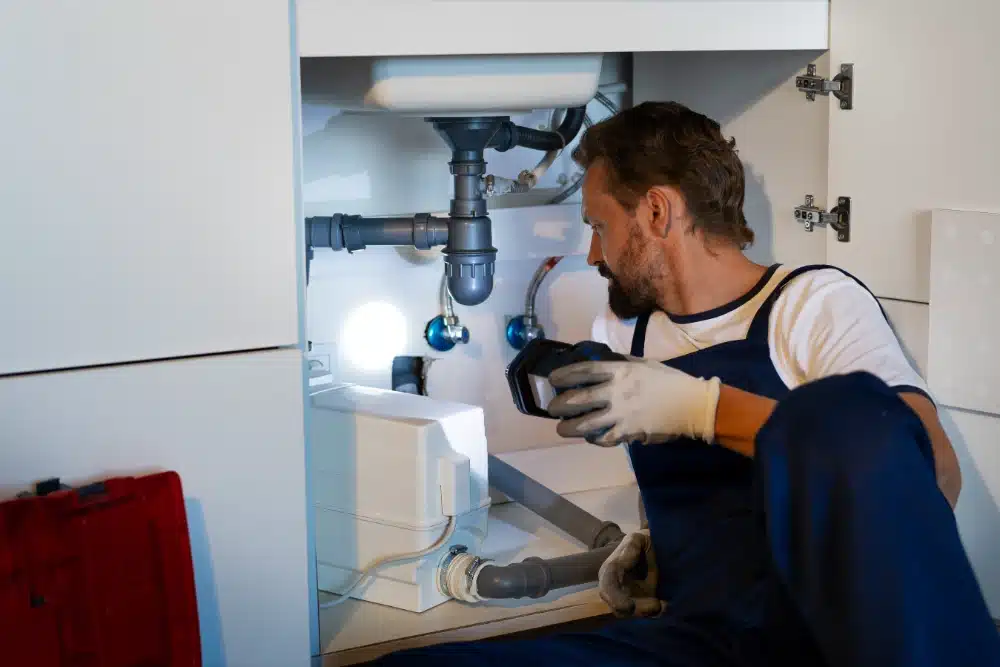
Plumbing Leak Detection Services, Without Tearing Your Walls Apart
Main Drain Mechanical is a licensed plumbing and mechanical company serving strata buildings, general contractors, and homeowners across the Lower Mainland, with plumbing leak detection services as one of the core diagnostic offerings the team handles from the first call through to a confirmed fix. Red Seal certified and Class B gas fitter licensed, the crew brings the credentials and the equipment to locate leaks accurately before any repair work begins. If water is showing up somewhere it shouldn’t, and you’re not sure where it’s actually coming from, that’s exactly the kind of problem this team is built to sort out.
When You Know Something’s Wrong but Can’t Find Where
The water bill climbs for no obvious reason. A patch of drywall feels soft to the touch. There’s a faint smell of mildew behind a wall that was dry last season. You shut off every tap and watch the meter needle keep moving. That moment, standing there knowing water is going somewhere it shouldn’t, is the one most people try to solve themselves. They check under the sink, run the taps, look for the wet spot. When nothing obvious turns up, the temptation is to wait and see. The problem with waiting is that the pipe doesn’t wait with you. Concealed leaks don’t stabilize; they saturate framing, feed mold, and undermine finishes until a manageable repair becomes a gut job.
What Plumbing Leak Detection Actually Involves
Plumbing leak detection is the process of systematically locating a hidden water source without tearing open every wall or floor on a hunch. This is where plumbing water leak detection earns its keep: Main Drain Mechanical’s Red Seal-certified plumber brings the tools and trade knowledge to trace moisture back to its origin; either that’s a pressurized supply line seeping behind tile, a pinhole leak in a corroded pipe, a drain fitting weeping inside a cabinet, or a slab penetration that’s been damp for months, then confirms the exact location before any repair work begins. The result is a targeted fix, not a fishing expedition through finished surfaces.
How We Approach a Leak Investigation
Every call is different, but the method is consistent, assess the full picture first, so the repair that follows addresses the actual source.
- We confirm the system is actually losing water before opening anything, because misreading a condensation issue or normal pressure fluctuation as a leak wastes your time and money on unnecessary repairs.
- We trace the moisture path systematically from where it appears back toward the source, because water travels along framing and pipe runs before it surfaces, and the wet spot you can see is rarely where the failure is.
- We check both supply and drain lines as part of a complete assessment, because a leak that looks like a supply issue sometimes originates at a loose drain fitting or a failing seal further up the stack.
- We use the diagnostic findings to scope the repair precisely, because an accurate location means only the affected section of pipe or fitting gets opened up, preserving surrounding finishes and reducing the overall cost of putting things right.
- We document what we find with photos and a clear explanation you can act on, because a strata manager needs something to bring to council and a homeowner needs to understand what they’re approving before work proceeds.
- We back every job with a 1-year workmanship warranty, because a detection and repair done right should hold, and if something isn’t right, we stand behind it.
Our Approach
How Our Plumbing Leak Detection Service Works
Most people picture leak detection as a plumber showing up, poking around, and handing over a number. The actual process is more deliberate than that, and knowing what to expect at each stage makes the whole thing less stressful.
- Initial Call and Site Briefing: Before anyone arrives, we ask a few pointed questions: where you first noticed the signs, how long it’s been going on, and whether anything changed recently, a renovation, a new appliance, an unusually high water bill. Your answers shape where the technician starts looking and which tools they bring, so the first visit isn’t a fishing expedition.
- Pressure and Flow Testing: On arrival, the technician isolates sections of your supply system and checks pressure across them. A drop in pressure in a closed section confirms there’s a breach somewhere in that run, it tells us the leak is real and roughly where to narrow the search. This step typically takes 20–40 minutes and gives us hard data before any walls or floors come into question.
- Non-Invasive Instrument Scanning: Using acoustic listening equipment and moisture detection tools, the technician traces the pipe route and listens for the sound signature of water escaping under pressure. Moisture readings map how far saturation has already spread. At this stage most leaks resolve to a specific wall cavity, floor section, or slab zone, no exploratory cutting required
- Source Confirmation and Mapping: Once the instrument scan points to a location, the technician confirms it, either visually where access exists, or by a second targeted pressure test on the isolated run. You get a clear explanation of where the leak is, what’s causing it, and how far the moisture has traveled. No vague ‘somewhere in that wall’ answer, an actionable location the repair can be scoped from.
- Written Report and Next Steps: You receive a written summary of findings with photos before we leave the site. For strata and commercial clients, this document is formatted for council or management review. For homeowners, it’s plain-language confirmation of what was found and what the repair involves. If Main Drain Mechanical is handling the repair, the findings go directly into the repair scope, no retelling the story to a second crew.
What Plumbing Leak Detection Costs in the Lower Mainland?
Most residential leak detection in the Vancouver area runs a diagnostic service fee in the range of $150–$400, which covers the pressure testing, instrument scanning, and written report. Some local shops charge a smaller diagnostic visit, around $120 + GST, and waive it if you proceed with the repair.
Harder-to-reach leaks cost more. A slab leak under concrete, a multi-suite strata investigation, or a source buried behind a finished ceiling takes more time and equipment on site, and can push detection past $600, or higher when several possible sources have to be ruled out one by one.
The single biggest cost variable is access. A leak behind an open mechanical room wall is quick to confirm; one under a slab or inside a finished wall takes longer. Rather than quote a flat figure that won’t fit your case, we give you a clear estimate before any work begins.